As easy-to-reach energy fields on land are used up, energy companies search for oil and gas deep under ocean waters. In many modern deepwater projects, companies do not build giant platforms that reach all the way down to the seabed. Instead, they place heavy drilling and production equipment directly on the ocean floor. This specialized field is called subsea engineering.
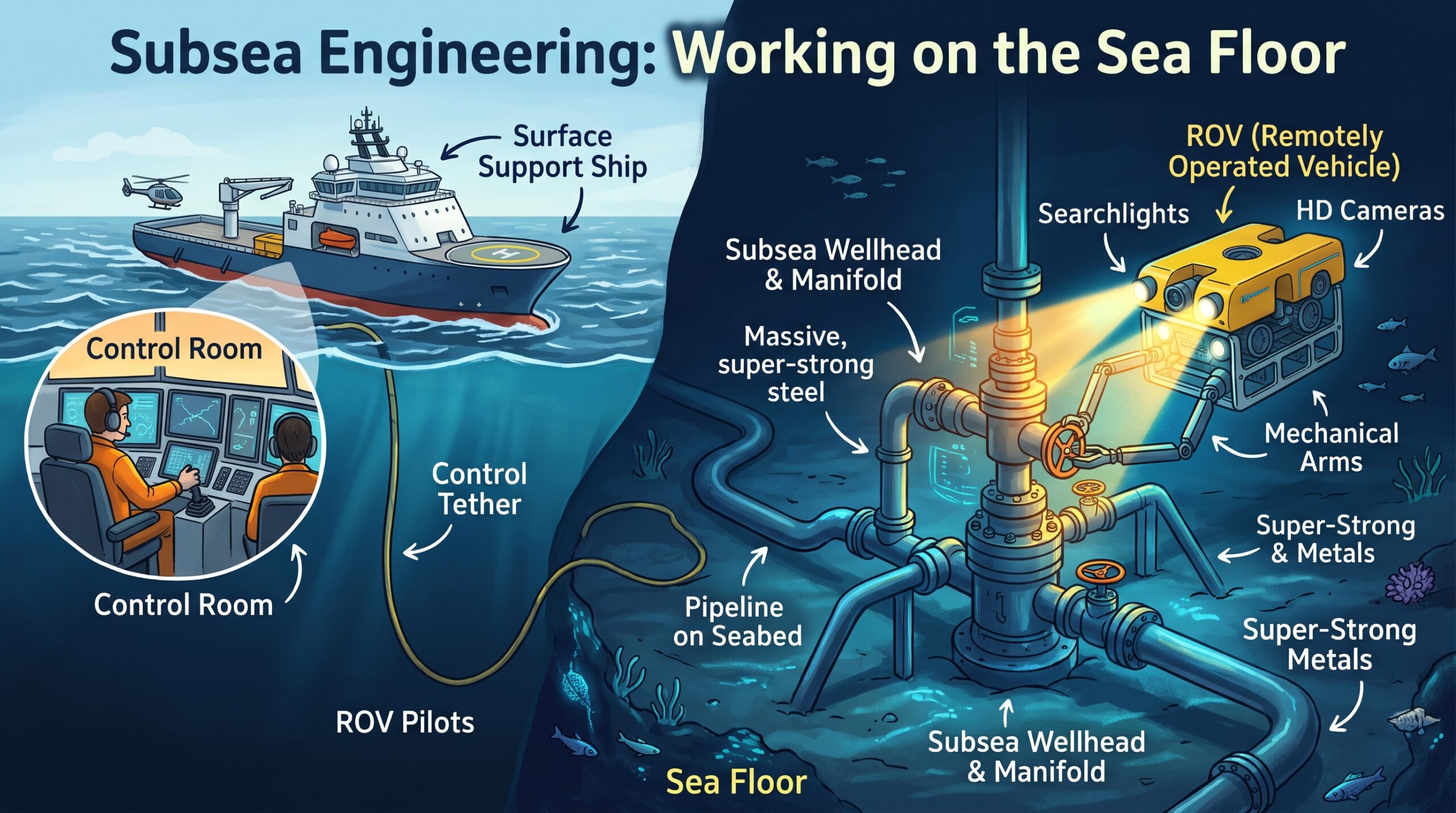
The subsea environment is one of the most challenging places on Earth. Hundreds or thousands of meters below the waves, sunlight cannot reach, and the water is freezing cold. The water pressure is also immense—strong enough to crush standard metal containers like empty soda cans. Subsea equipment must be built from super-strong metals and tested carefully to survive these harsh deep-sea conditions for decades.
Because human divers cannot dive that deep safely, subsea engineers use underwater robotic vehicles called ROVs. These remotely operated robots are controlled by skilled pilots sitting in control rooms on surface ships. ROVs have high-definition cameras, bright searchlights, and mechanical arms. They swim deep down to turn valves, inspect metal pipes, and connect cables on the seabed with incredible accuracy.